Muditā - a Sanskrit and Pali term meaning sympathetic or vicarious joy
मुदिता) - the British and Irish Lions squad announcement, the Trent Alexander-Arnold transfer, Ipswich Town Football Club under Bobby Robson and some general musings.

The British and Irish Lions and Michael Owen on the Trent Alexander- Arnold transfer
A few weeks ago, it was so joyful watching groups of players receiving the news that they had been selected for the 2025 British and Irish Lions Tour of Australia, the outpouring of love and joy for these players from their teammates towards their pal who made the plane was incredible, some of those showing this joy to their mates would have been people who were in the running but not selected, it would have been so easy for them to show jealously but to a man they were pleased for their mates.

It got me thinking about a word I had heard during lock down but had forgotten (I’m pretty sure that I heard Craig White say it first in lock down on a podcast). So, I typed “a word for finding joy in other people’s success” into ChatGPT and the word मुदिता) Muditā duly popped up!
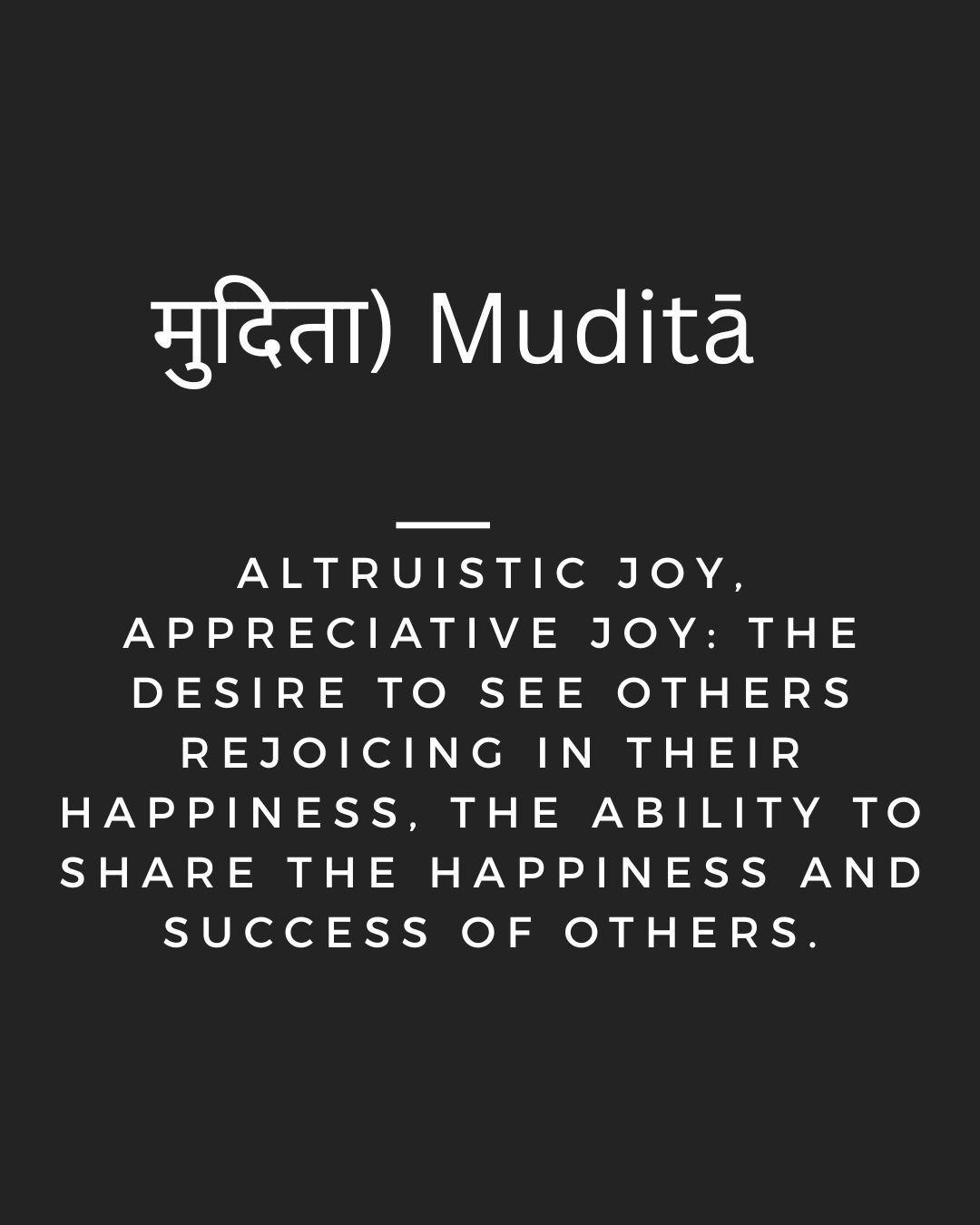
General definition (in Buddhism)(mu di taa) happiness at anothers good fortune; sympathetic joy. Source: Buddhist Information: A Simple Guide to Life. Mudita is altruistic joy, appreciative joy: the desire to see others rejoicing in their happiness, the ability to share the happiness and success of others.
I was struck with a tinge of sadness that there was no word meaning that in English, then I started to think about it more and notice times that I saw it in action and when I saw the antithesis of it too.
Again, in a sporting context, Michael Owen commented recently on the Trent Alexander-Arnold transfer from Liverpool to Real Madrid with a touch of Mudita:
Who can criticise him, really? There will be one or two people that will but he’s been there, seen it, done it, won absolutely everything the game has got to offer for Liverpool….
It’s easy for me to say, I know half the fans will be screaming at the telly. But if I was a Liverpool fan I'd be saying: 'Thank you very much for all your service, you’ve been incredible, won everything. Good luck and we wish you well!..
Granted he was applauded by fans in the last game of the season but the memory and sentiment behind the boos when the news came out two weeks before can’t be erased.
Thoughts and reflections
Every teacher knows that when giving tests back to pupils they are all really interested in how each other has done, I’m not convinced that this is regularly a mudita moment, it’s probably the opposite and they want to see how much better they have done than a friend.
It would be great to reframe and broaden our idea of success and get the concept into young people’s heads, their thinking and their actions. I was struck recently by an article written by Headteacher Declan Lindane in Catholic Networking Magazine, “The True Measure of Educational Excellence – A School’s Journey from Inadequate to Outstanding” Declan might not know it (he probably does) but he certainly embraces mudita, most in education do
Over the past ten years, we have developed a philosophy that places the dignity of every individual at the heart of all we do. Inclusion, for us, is not simply about policy, but about building a community rooted in Gospel values, where every student feels they belong and can thrive. Sharing our story felt important—not because we have all the answers, but because we’ve learned that when inclusion is done well, it becomes a powerful force for good. It strengthens the fabric of the school, transforms lives, and reminds us of our shared responsibility to ensure no one is left behind.
We are living in a time when many people are obsessed with their children being the best at everything. For some parents, it seems to be the only focus in their lives. As a result, there are countless highly academic and sports-focused schools, with parents fixated on their children being in the “A team” or the top academic set.
In most schools — whether fee-paying, state-funded, selective or non-selective — there is a growing culture of pressure and high achievement. Many adults today are incredibly successful and remain driven to accomplish even more, often passing that same ambition on to their children. At the same time, we are witnessing a well-documented epidemic of mental health issues among young people. While I don't believe parents intend to cause harm by pushing their children, social media only amplifies these pressures. The stress young people face must come from somewhere — and the intense expectations placed on them, whether in academics, sports, music, or other pursuits, undoubtedly contribute. This pressure often starts alarmingly early in life. I remember going past a local Grammar school on a bus with my now 20-year-old when he was 7, and he told me that that is the best school, I asked why and he said because you have to take an exam to get into it!
Striving for excellence is important but pressure to constantly “be the best” has got to affect people adversely and in young minds can foster jealousy, resentment, a win at all costs attitude, which are all qualities that don’t nurture long term success and will ultimately lead to unhappiness.
I’m pleased when these highly able pupils do well, but I’m equally pleased when a pupil who really struggles, does their best and achieves their best, it might not register on the academic scales or league tables and it will never be the best, but it is and alwayys will be their best! Should success be measured on top grades; it is all relative and shouldn’t all success be celebrated?
As Declan says if grades are the only way we judge success
it sends a devastating message that worth is measured solely by academic performance, rather than character and contribution to society. This approach neglects education’s wider purpose of shaping engaged thoughtful citizens formed in service of others.
Don’t get me wrong I’m not saying children shouldn’t try to be the best they can in all that they do, they should, but delighting in someone else’s success does not diminish their own worth or potential.
Ipswich Town and the Cobbold brothers and Bobby Robson
I remember a TV interview I saw with Bobbly Robson many years ago, it could have been on “Parkinson” or “Wogan” but I can’t be sure,Bobby said that when they lost, his Chairman at Ipswich used to say to Bobby something along the lines “don’t worry too much about it, if we didn’t lose no one else would get that feeling of winning.”
I don’t think the John and Patrick Cobbold knew much about mudita but they seem to have embodied it when they were Chairmen of Ipswich Town Football Club.
Is it a surprise thjat Bobby Robson’s time as manager of Ipswich Town Football Club from 1969 to 1982. the club won the FA Cup and the UEFA Cup. He was appointed by John Cobbold and throughout his tenure at Ipswich the two Cobbold brothers, first John and then Patrick were the Chairman.
I have tried but failed to find the clip that I saw so many years ago but in my search for it I’ve found out more about two incredible men, there are some more brilliant quotes here about Mr John and Patrick Cobbold
I adored these two quotes from Sir Bobby Robson in ‘Living the Game’ by Bob Harris (2003) he said
When we won John Cobbold had a bottle of champagne and when we lost, he had two bottles of champagne. That was his civilized way of looking at defeat. He was a remarkable guy, an outstanding fellow.
In ‘Bobby Robson, My Autobiography’ (1998) he wrote
Mr John and his brother Patrick, who later had his spell as chairman, took everything in their stride and were never flustered or angry. The only time they ever recognized a crisis was one day when they discovered that the boardroom was short of Sancerre. When the club clinched a big sponsorship deal John Cobbold addressed the gathered media: ‘It has been suggested that we will squander the Sponsors’ money on wine, women and song. That is absolute nonsense. We do not do a lot of singing at Portman Road.
Loyalty, respect characterised their leadership and ensured long term stability, in many ways their stewardship and leadership of the club mirrored the spirit of mudita, they might not have known it but they rejoiced at seeing players achieve their potential, fans experiencing triumphs and managers earning recognition, and they did it for their opposition too. They found joy in their own but also in others success.
Again I ask was it a surprise that Bobby Robson’s time as manager of Ipswich Town Football Club from 1969 to 1982. the club won the FA Cup and the UEFA Cup.
In conclusion – cultivate more mudita
Sometimes failing isn’t a bad thing, you learn from it, it teaches you valuable lessons. As my mother has always a said when something doesn’t turn out the way you neceassarly wanted it to turn out, “something worse passed you by.”
In a world that often rewards self-promotion, cultivating more mudita is might just be a most necessary message! Finding success in other achievements won’t make anyone less ambitious, but maybe it will actually make them more emotionally intelligent, more resilient and ironically more socially connected.
Glad you enjoyed it, if you hit the link it takes you to Declan Linnanes Linkedin page and the article is in the photos, he is Head at Nicholas Brakespeare School in St Albans, I don’t have the link to the actual article.
Excellent post. Can you share the article from the Catholic Network?